This content was aggregated from local dealer and data and insights provided by the USA Today Network Automotive Insights team using Google Gemini and the Vehicles for Sale Near Nashville marketplace writing team.
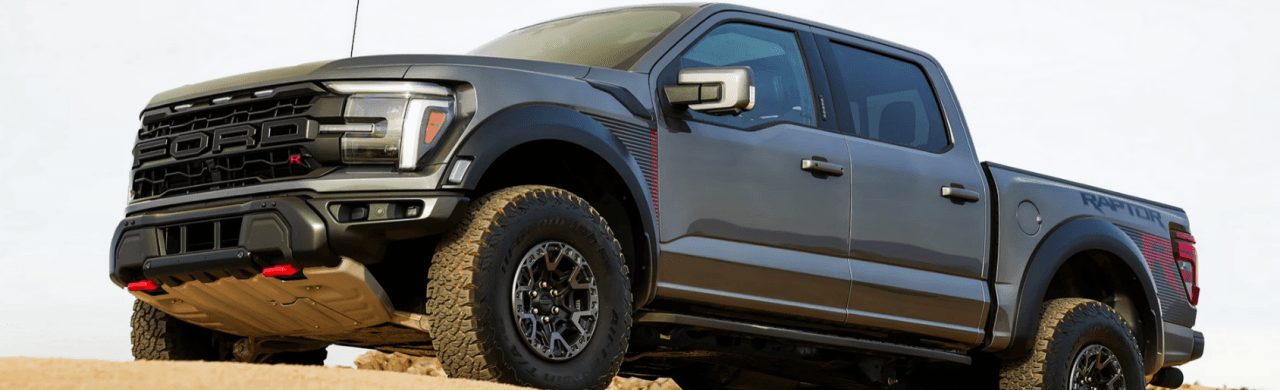
For truck shoppers Near Nashville, choosing between the Ford F‑150 and Ford F‑250 often comes down to how much capability you truly need versus how comfortable you want your daily drive to be. Both are serious pickups with strong reputations, but they are built for different kinds of owners and jobs.
If you are trying to decide which fits your lifestyle, budget, and work in Middle Tennessee, it helps to step back and think about how you use a truck most days—not just once or twice a year.
At a high level, the F‑150 is a light‑duty full‑size pickup, while the F‑250 sits in Ford’s Super Duty lineup as a heavy‑duty work truck. That difference shows up in:
Frame and suspension design.
Available engines, especially heavy‑duty diesel choices in the F‑250.
Towing and payload ratings.
Ride quality and how the truck feels when it is not loaded.
In simple terms, the F‑150 is tuned to balance everyday comfort with strong capability. The F‑250 is engineered to handle extreme loads first, with comfort coming after that core mission.
For many Nashville‑area drivers, the F‑150 is the more natural fit. It is typically the better choice if you:
Use your truck as a primary daily driver.
Do a mix of commuting, family hauling, and weekend projects.
Tow moderate loads—a small camper, boat, or utility trailer—rather than the heaviest trailers on the road.
Want easier parking and nimbler feel around the city and suburbs.
The F‑150’s lighter construction usually means a smoother ride over rough pavement and easier maneuverability in tight parking lots, garages, and crowded streets. For a lot of owners, that matters more day‑to‑day than maximum tow ratings they may never use.
The Ford F‑250, as a Super Duty truck, is built around serious work. It is the better choice if you:
Regularly tow very heavy trailers, such as large campers, equipment trailers, or livestock trailers.
Carry heavy payloads in the bed as part of your job.
Spend a lot of time at job sites, on rural property, or on rougher roads where a heavier‑duty frame and suspension pay off.
Need a truck that will work at or near maximum capacity frequently, not just once in a while.
In those situations, the F‑250’s heavy‑duty suspension, stronger frame, and available big diesel powertrains give it a level of durability and control that a light‑duty truck is not designed to match.
If you rarely tow near the top of any rating, comfort becomes a major factor. The F‑150 typically:
Feels more compliant over bumps when unloaded.
Is easier to live with in daily commuting and errands.
Offers interiors that can be equipped from basic work‑truck setups to near‑luxury trims with leather, big screens, and advanced tech.
The F‑250 can certainly be comfortable—especially in higher trims—but its suspension is tuned to work best with weight on board. That means it can feel firmer and more “industrial” when you are just running to the store or commuting in Nashville traffic.
Operating costs also differ. Generally:
F‑150 gas engines tend to offer better fuel efficiency than many heavy‑duty setups, especially if you are mostly unladen.
F‑250 trucks with large gas or diesel engines are optimized for work, not sipping fuel, so day‑to‑day running costs can be higher if you are not regularly using the extra capability.
If your truck spends a lot of time in city traffic, a properly equipped F‑150 may keep your running costs more manageable than an over‑built heavy‑duty truck you rarely push to its limits.
In the current used‑truck landscape Near Nashville, shoppers often see:
A good supply of used F‑150s, from basic work trims to high‑end models, creating opportunities to compare features and pricing.
Strong demand for well‑kept F‑250s among contractors, haulers, and ranchers who need heavy‑duty capability, which can help these trucks hold value.
For buyers whose needs line up with what an F‑150 can do, the light‑duty truck frequently offers a more accessible entry price and wider selection. For those who truly need heavy‑duty strength, an F‑250 is less about “deal‑hunting” and more about finding the right truck to do the job.
Q: Which is better for daily driving Near Nashville, the F‑150 or F‑250?
A: For most daily drivers, the F‑150 is the better fit. It usually rides more smoothly when unloaded, is easier to maneuver, and can still handle plenty of towing and hauling for typical personal use.
Q: When do I really need a Ford F‑250 instead of an F‑150?
A: If you consistently tow heavy trailers, haul large loads, or work in environments that demand heavy‑duty hardware, the F‑250 is the right tool. Occasional light towing and home projects usually do not require Super Duty capability.
Q: Does the F‑250 cost significantly more to own than the F‑150?
A: Purchase price, fuel use, and some maintenance items can be higher on an F‑250 because it is built as a heavy‑duty truck. That is worthwhile if you regularly use its capabilities; otherwise, an F‑150 is often more economical.
Q: Can I still get a comfortable interior in a heavy‑duty F‑250?
A: Yes. Higher F‑250 trims offer very comfortable cabins with advanced tech and luxury‑leaning features, but the underlying ride and size still reflect its heavy‑duty nature.
Q: Where can I compare used F‑150 and F‑250 trucks Near Nashville?
A: You can browse and test drive both models at local retailers such as Zeke’s Automotive Group, which offers a range of used Ford pickups and can help assess which truck best matches your towing and daily‑driving needs.
Written for https://vehiclesforsalenearnashville.com
By the USA TODAY Network Automotive Insights Team, in collaboration with Zeke's Automotive and the Vehicles For Sale Near Nashville - Tennessean.